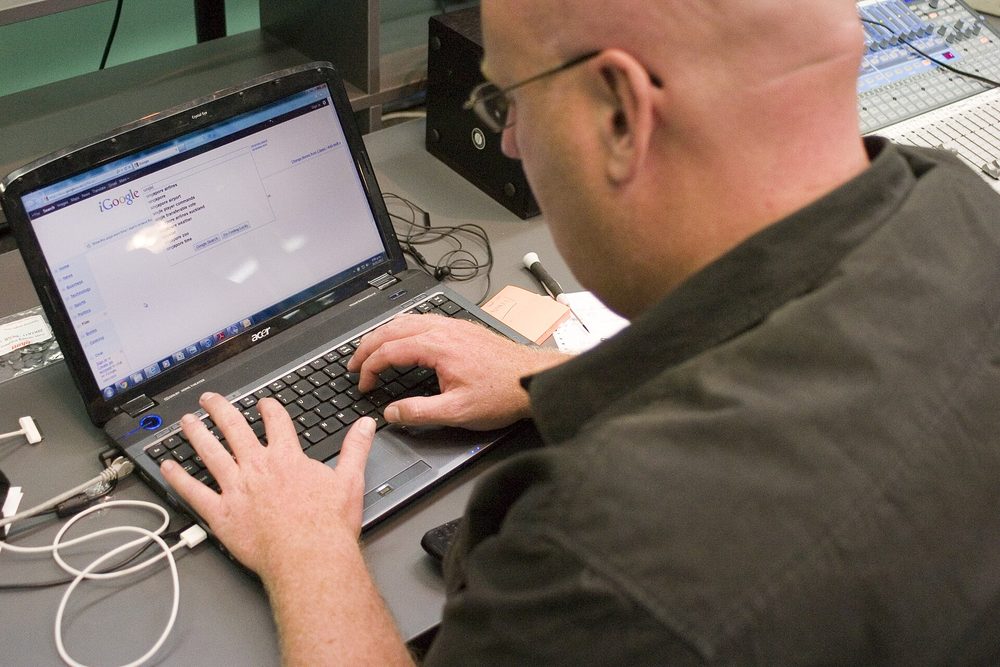
It is nine at night and someone who moved to your city last month has a toothache. She opens an AI assistant and types the kind of question NetWebMedia's check uses as its own example: best dental clinic in San Diego. The answer names three clinics, gives a line on each and suggests she call the first one in the morning. Your clinic is four blocks from her apartment. It is not in the answer, and she has no reason to look further, because there is nothing further to look at.
Nobody sends you a report when this happens. A search results page at least has a page two. An assistant's answer has no page two, so the businesses it leaves out never learn that they were left out.
That is the gap the free Am I cited by AI? check is built for. You give it your business name, city and industry, plus what customers call your type of business. It builds five consumer-style questions from those, runs each one through an AI answer engine with live web search and records whether you were named. It also keeps the two lines that matter more: who was named instead, and which sites each answer drew from. You get a score out of 100 and three fixes in about a minute, and no call is required.
The score is the least interesting line
The page publishes the whole formula, which I like: 20 points for every question where your business is named, five questions, 0 to 100. A 40 means you came up in two answers out of five. It does not measure how warmly you were described or whether you were mentioned first or last.
The check also refuses to guess. If the call to the answer engine fails, the page shows an error instead of a number, so a zero on your report is a real zero and not a timeout dressed up as one. Read the number once, then move on to the two lists underneath it. That is where the work is.
Describe your business the way customers do
One field on the form deserves more thought than it usually gets: what do customers call your type of business? The questions the check builds are only as close to real ones as the words you give it. If you call yourself a family oral health practice and your patients say dentist, type dentist. If people search for a tax accountant and your sign says advisory services, type tax accountant. You are trying to reproduce the question a stranger would ask, so use the stranger's vocabulary.
Read who was named instead
Under each question the report shows the businesses the engine named. Read them slowly, one question at a time. Sometimes it is the rival you expected. Sometimes it is a business you never thought of as competition, or a directory page that lists a dozen names and says almost nothing about any of them.
For each name, open their website and look for the sentence the assistant could have repeated. Does their page say in plain words what they do and where they do it? Does it mention the neighbourhood, or the kind of customer they take? An answer engine can only repeat what it can read. It is worth asking whether the business that got named simply wrote the obvious thing down where you did not.
Then read where the answers came from
The source list is the most actionable part of the report, because it shows you where the engine went looking for your category in your city. Each kind of source calls for a different response:
- Your own site. If your site appears as a source and you still were not named, the page it read did not say what the question asked. Find that page and fix the sentence.
- A review site or directory. Check that your listing exists, sits in the right category and describes you in more than a name and a phone number.
- A local article or a best-of list. Find out how the named businesses got onto it. Sometimes the answer is that they asked the editor.
- A competitor's own website. The engine is quoting them directly. Read the page it used and notice how plainly it answers the question.
None of these needs an agency. Several of them need no more than an evening and a login you already have.
Treat one run as one photograph
The page is candid about this and I agree with it: answer engines change their answers between sessions and between tools, so one run shows you a pattern rather than a ranking. ChatGPT, Perplexity and Google AI Overviews each use their own retrieval, and the check describes itself as a directional read on how answer engines see your business, not a mirror of any single product.
In practice that means two things. Don't panic over one missing mention, and don't celebrate one lucky one. Make a change, wait a week, run it again and compare the names question by question. The check allows five runs per day per connection, which is far more than this needs.
An order for the fixes
The report ends with three fixes for your result. Before you act on them, spend ten minutes on the two lists above, because they explain why the fixes matter. Then I would work in this order:
- Make the page that should answer the question actually answer it: the service and the city, in a sentence a stranger could quote.
- Fix or claim your listing on every directory and review site that showed up as a source.
- Work through the three fixes the report gave you.
- Run the check again the following week and compare who was named, question by question.
Which free check answers which question
NetWebMedia runs a few free checks and they are easy to confuse, so here is how I would choose. This one answers whether AI assistants name you for questions in your city. The AEO Citation Index reads a single page and scores its structure, without asking any assistant anything. The free website audit measures the whole site across 15 dimensions. And if you want a person to test the answers and write the fixes up for you, that is the paid AI Visibility Scan.
If you would rather not do it yourself
The check sends the written result to your inbox and follows up once with what NetWebMedia would do first. You can reply STOP or ignore it. If you want the fixes done for you, the check page lists AEO Starter at $249/mo, with a written plan within 48 hours of your request and no call required. I am obviously not neutral about that option. I would still tell you to run the check first and do the evening's work above yourself. If the names under your questions change, you will know it was worth it, and if they don't, you will know exactly what to ask for.
Does your business show up when AI answers?
ChatGPT, Claude, Perplexity and Google's AI Overviews are already answering the questions your customers ask. The $49 AI Visibility Scan shows you where you're cited, where you're invisible, and the three changes that move you first — a written report in your inbox within 48 hours. If nothing in it is actionable, you don't pay.
Run the $49 AI Visibility Scan →Share this article
Comments
Leave a comment